
Meet Our Coaches
Each quarter, our newsletter shines a light on a small number of coaches from the Stichting Treehouse Coaching network. Through these conversations, we explore what inspires them, how they think about coaching, and why they believe making high-quality coaching accessible can create positive change far beyond the individual.
On this page, you’ll find both the edited & full (unedited) interview. While our newsletter does feature the edited version, we wanted to share the complete conversation as well so you can hear each coach’s voice in full and explore their reflections on coaching, leadership, social impact, and the experiences that shape their practice.
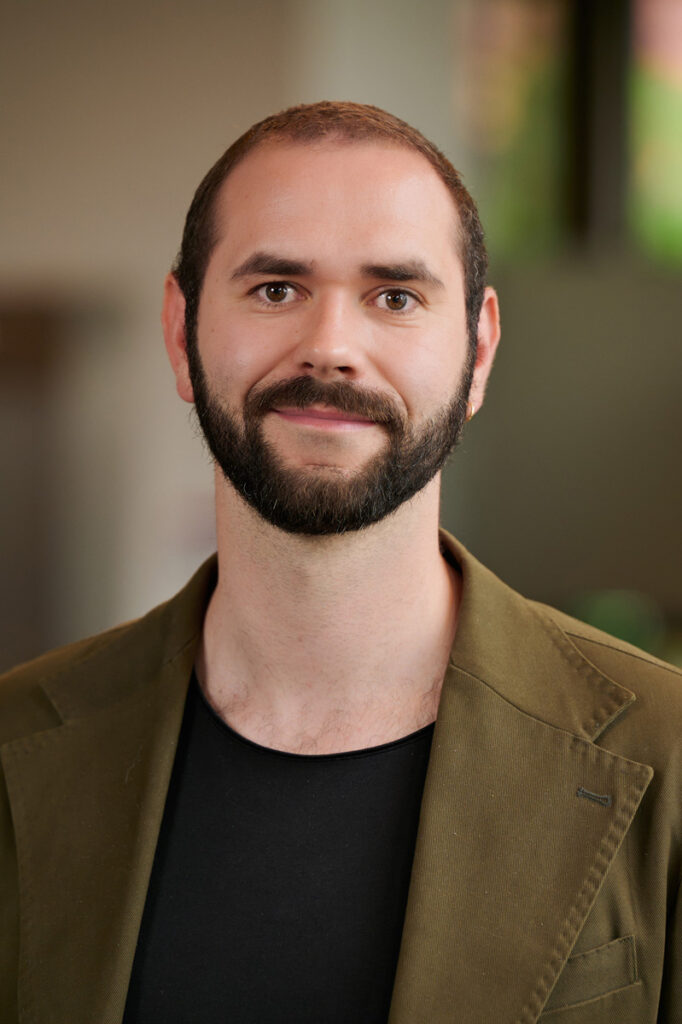
In this interview, we shine a light on Jaro Pichel—their journey into coaching, what continues to inspire their work, and their vision for making coaching accessible to all.
Interview with Jaro Pichel (Edited version)
“Everyone deserves a space where they can pause, be fully heard and reconnect with themselves.”
When Jaro introduces himself, he often begins with his name. “Jaro is short for Jaroslav,” he explains. “In the Slavic languages, jar means spring or fierce, while slav means glory.
It is a fitting introduction for someone whose work centres on renewal, growth and helping others navigate periods of transition.
Spring, after all, is Jaro’s favourite season. It represents new life emerging after winter: energy returning, plants blossoming, possibility unfolding. Those themes run like a thread through his personal story and his coaching practice.
Although Jaro grew up in Germany, questions of home and belonging have shaped much of his life. His grandparents were displaced after the Second World War, leaving Silesia and Danzig behind. His parents moved frequently during his childhood, searching for the right place to settle. Today, after nearly a decade living in the Netherlands and the past five years in Amsterdam, those questions still accompany him.
“Where is my home? Where do I belong?” he reflects. “Those are questions I continue to carry with me.”
Alongside his work as a coach, Jaro is a teacher educator and trainer at Vrije Universiteit Amsterdam. There, he supports teachers, researchers and educational leaders as they navigate questions of professional identity and leadership: How do I step into a new role? How do I inspire others? Where do my strengths and passions fit within the wider organisation?
His work is grounded in curiosity and connection. In recent years, he has explored the role of the body in teaching and learning, fascinated by how often we overlook the intelligence held within physical sensations, intuition and embodied experience.
As a coach, he brings what he describes as “an open presence, a curious mind and a systemic perspective” — looking not only at an individual’s challenge, but also at the wider context in which it exists.
The Power of the Right Question
Jaro’s path into coaching emerged naturally from his work in education.
“I’ve always been fascinated by what helps people grow,” he says. “Transformation rarely comes from advice or telling someone what to do. Instead, it comes from asking the right question.”
Those questions can open unexpected doors.
“What keeps inspiring me is seeing people reconnect with their own wisdom,” he says. “Those ‘aha’ moments, when someone returns to their life with renewed confidence.”
For Jaro, the true reward lies in witnessing change ripple outward.
“Real transformation doesn’t only happen within the individual,” he says. “It affects the places where they live and work.”
Why Access Matters
That ripple effect is one of the reasons Jaro was drawn to Stichting Treehouse Coaching.
“Treehouse combines two things I deeply value: high-quality coaching and social impact,” he says. “Coaching shouldn’t only be available to people with financial means or through large organisations.”
Research increasingly points to the positive effects of coaching on wellbeing, goal attainment and professional development. Yet access remains uneven.
Full (Unedited) Interview
Introduction
Hi, my name is Jaro – an abbreviation of Jaroslav. It is rooted in the Slavic language, where ‘jar’ means “spring” or “fierce,” and slav means “glory.” The glorious spring you could call me. I love the Spring, as it brings new life and energy, and plants are blossoming after a dark winter period.
My own roots are German, although my grandfather came from Silesia, which became part of Poland after the Second World War. My grandmother, too, had to leave her hometown of Danzig after the war. In many ways, this is a story that has continued through the generations: the search for home. My parents moved frequently when I was young, always searching for the right place. The questions Where is my home? and Where do I belong? are ones I continue to carry with me, having lived as an expat in the Netherlands for almost ten years, including the past five years in Amsterdam.
Here, I work as a coach, teacher educator, and trainer at the Vrije Universiteit Amsterdam. Walking alongside teachers, researchers, and educational leaders, I often encounter questions of leadership (How do I step into this new position? What is needed to inspire my colleagues to embrace an idea?) and professional identity (Am I a teacher or a researcher? Where do my passion and strengths lie and how do they fit in the organizational context?). In recent years, I have been researching the role of the body in teaching and learning, and I find it fascinating that we still largely ignore this source of intelligence, knowing, and decision-making. Alongside my university work, I coach professionals navigating transitions into leadership positions or new roles in value-driven professions. I would say my coaching is characterized by an open presence, a curious mind, and a systemic perspective that looks beyond the individual question to the wider context.
Finally, I am a Zen meditation practitioner, a practice through which I find stillness and inspiration. The philosophy of interbeing, that we are not separate from the leaf, the ocean, or the bird, deeply resonates with me. I hope my work inspires people to live more in harmony with all beings around us, and to remember that our own flourishing is inseparable from the flourishing of all life
1. What brought you to coaching, and what keeps you inspired today?
I’ve always been fascinated by what helps people grow. As a teacher educator, I discovered that transformation rarely comes from advice, or telling someone what to do. Instead it comes from asking the right question that evokes a new insight either in the individual or in the group. Coaching creates that space. What keeps inspiring me is seeing people reconnect with their own wisdom, an “aha moment”, where they go back to their place with renewed confidence. And what makes me happy is to see real transformation happening both in the individual but also in the place where they operate. That makes me keep on doing this work!
2. What drew you to Stichting Treehouse and its mission?
Treehouse combines two things I deeply value: high-quality coaching and social impact. Coaching shouldn’t only be available to people with financial means or through large organisations. Treehouse shows that coaching can strengthen not only individuals who can afford, but also minorities and people who might benefit from the effects of coaching even more than the usual suspects.
3. Why do you believe coaching should be accessible to more people?
Everyone encounters moments of uncertainty or transition – and much research in the past decades has confirmed that coaching works as an approach for wellbeing, goal attainment, and professional development. Having someone who truly listens and helps you reflect and grow shouldn’t be a privilege. When coaching becomes more accessible, people are better able to care for themselves, their relationships and the communities they’re part of.
4. Tell us about a moment when you witnessed the impact of coaching extend beyond the individual.
A client once came to coaching to find better ways to lead a project. As they became more aware of the fact that their leader was not taken their responsibility and confronted this person, something seemed to shift. The leader would take more ownership which resulted in the entire team also began communicating more openly and addressing tensions earlier. It reminded me that coaching rarely ends with one person, but ripples through relationships.
5. What does social impact mean to you in your coaching practice?
Social impact starts with recognising that we’re all connected. Every person influences families, teams and communities. Coaching helps people become more aware of that influence and make choices that contribute to healthier relationships and systems. For me coaching, is a way to heal old wounds and transform systemic oppression, that lingers in so many of our work cultures.
6. How can coaching contribute to meaningful change in communities, organisations or society?
Meaningful change starts with people. Like Margaret Meadow reminded us “never underestimate the power of a small group of committed people to change the world. In fact, it is the only thing that ever has.” Coaching helps us pause, reflect and become aware of the patterns we bring into our relationships. As people become more conscious and compassionate, they often create healthier cultures around them. So yes, what may start with one conversation, can turn into something much bigger.
7. What have you learned from working with people whose life experiences differ from your own?
Mostly humility. Coaching has taught me that I can never fully know nor truly understand someone else’s experience. Staying curious, listening deeply and being willing to learn are some of the most important qualities I wish to bring to my coaching. It would be sad if I go into a coaching session, having already predefined ideas who some is or how they would behave. It is in the present moment, where there is no “agenda” that beautiful things emerged. Of course, we are biased, so it is important as a coach (and too be honest human being) to stay critical and careful with one’s own assumptions – it goes quicker than we think 😉
8. What role do education and learning play in your work?
Learning is at the heart of everything I do. Whether I’m coaching or teaching, I see learning as more than gaining knowledge – it’s about becoming more aware of ourselves, others and how we want to engage with the world. I feel home at the Vrije Universiteit Amsterdam, where we like to say, at the VU you don’t become something but someone. This formative view on education, forming your character and not just disciplinary knowledge, is something I can relate to.
9. What gives you hope when you look at the future?
I find hope in beauty. When you walk through a forest, or even a park, there is so much to see, sense, feel. The sound of the birds, a crack of a branch, the smell of wet grass after rainfall. A Storch preparing the nest for the young ones. The same is when I am with people. When my colleague welcomes everyone with a big smile, or if you’re lucky, even a hug. It’s these small moments that make me hopeful and forget about all the horrors that are all over the news. Not that my attempt is to numb or ignore the painful reality and suffering, but to be able to keep seeing the beauty that exists too. I feel we have a responsibility to educate our new generation in being actively hopeful – and embody ways ourselves to deal with the future ahead.
10. If every person had access to high-quality coaching, what might be different in the world?
I think we’d see more empathy, better conversations and healthier relationships. Coaching doesn’t solve every problem, but it helps people respond with greater awareness instead of reacting automatically, and to tap into one’s own resource. Something that more people deserve than those who can pay it themselves or have a supportive employer.
The Ripple Effect
I’d love to see Treehouse help make coaching a normal part of community life, not something reserved for privilege or crisis. Small conversations can create lasting ripple effects, and we can create an equitable society based on wellbeing.
Quick Questions
A value you try to live by: Presence.
A book that shaped your thinking: Ten Love Letters to the Earth
A person who inspires you: Thich Nhat Hanh, Arawana Hayashi, Joanna Macy, and so many more..
A place where you feel connected to yourself: Walking in nature.
One word that describes your coaching style: Attuned.
One thing you’d like readers to remember: Lasting change often begins with a moment of silence, a breath, a sensation.
Closing Question
Why does making coaching accessible matter to you?
Because everyone deserves a space where they can pause, be fully heard and reconnect with themselves. When more people experience that, I believe that coaching can contribute to a society that is build on wellbeing and care.
Research Article, referred to: http://www.erikdehaan.com/wp-content/uploads/2023/11/Erik-de-Haan_BC486-Coaching-Today-October-2023_proofing_V7_.pdf